23/05/2026 General News
‘A gentleman’s choice of timepiece says as much about him as does his Savile Row suit’: so said Ian Fleming, creator of James Bond, a man who was never seen without a classic watch on his wrist, writes Sam Hicks.
Given the march of technology, you might think that the wristwatch has had its day. We all carry around a hyper-accurate timepiece in our pockets these days (our mobile phone), and increasing numbers of us are also strapping smartwatches to our wrists which measure our heartbeat, blood pressure and a myriad of other vital statistics.
It is true that sales of functional, day-to-day watches are declining, but that is certainly not the case when it comes to top-end, big-name wristwatches. As we increasingly rely on modern technology to tell us the time accurately, what we wear on our wrists is increasingly about aesthetics and fashion.
It is not uncommon for people to have a collection of watches that they wear on special occasions rather than everyday, perhaps matching their choice of timepiece with their outfits. Certainly the demand for leading brand watches such as Rolex outstrips supply, with waiting lists for new models (this situation is exacerbated by limited production numbers, ensuring that the market doesn’t become over-supplied).
No auction house can offer investment advice, but many people believe that buying a top-name, rare watch will be a good investment. The prices being achieved in the saleroom for such items suggests they may be right.
Believe it or not, the history of the wristwatch goes right back to the 16th century; Elizabeth I is said to have been given one by Robert Dudley in 1571. However, they were seen more as decorative bracelets (mainly for women) right up until the turn of the 20th century, when the ability to tell the time accurately became a necessity or modern warfare (it is conflict which so often drives new technologies), and the modern wristwatch was born.
It is the big name brands which command the highest prices at auction: Rolex, IWC, Heuer, Omega, Patek Philippe, Cartier and, increasingly, Longines. This is a market where brand is vital, both for the quality of the watches themselves, but even more so for the cachet and the scarcity they offer. And it’s often the simpler, non-jewelled examples which are most in demand.
Let’s look at three wristwatches which we have sold at Keys in recent months, each of which demonstrates an aspect which explains its appeal.
In the autumn we sold a yellow metal ladies wristwatch, which was double-branded: by the maker Patek Philippe and by the retailer Tiffany & Co. Versions with just the Patek Philippe brand also exist, but the double branding lends both rarity and prestige, adding to the value.
In fact, Patek Philippe and Tiffany & Co were founded within two years of each other, and have a long history of high quality production, individually and collaboratively. Although the watch was marked as ‘yellow metal’, it still sold for £2,500.
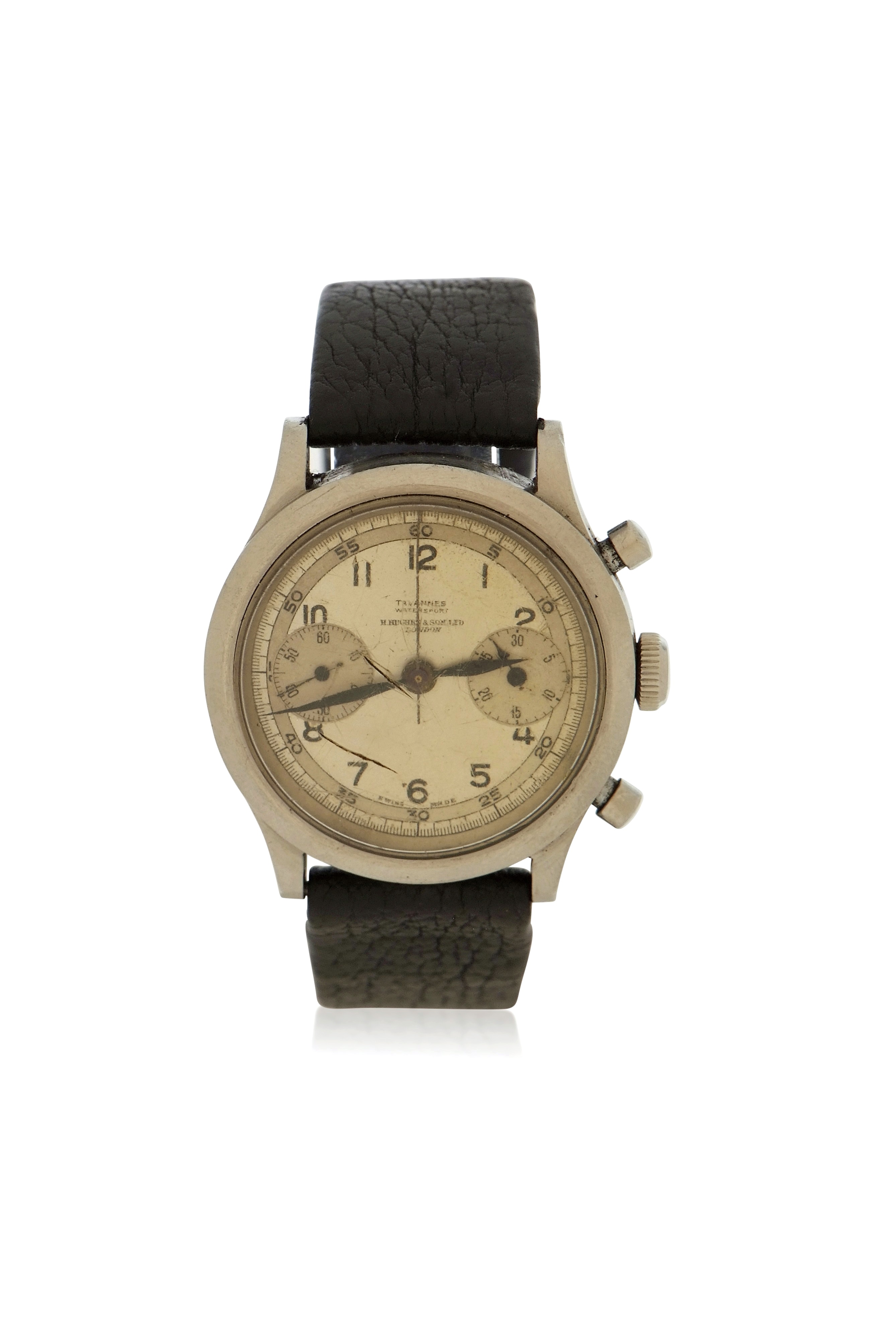
It was interesting to see the demand for a vintage Tavannes Watersport chronograph gents watch, which sold for £2,000 recently. This example was made from stainless steel, not gold.
Few outside the world of collectors will be familiar with the Tavannes name, but the firm used to make movements for more famous brands such as Jaeger Lecoulte, Cartier and Hermes, and was closely associated with another watch maker, Cyma. This watch was also double signed by the retailer, like the Patek Philippe/Tiffany one, lending it increased cachet.
The final example combines a sought-after brand, a rare vintage and excellent condition. It was an 18ct gold Omega Triple Date Moonphase watch dating to the late 1940s. This had the requisite natural patina caused by slow oxidation on the metal over time, and also boasted an unusually large case size for the age of the watch. Its triple date function, showing the day, date and month also added rarity value. After brisk bidding, it sold for £7,000
To make top money, a watch must be in perfect working order and accompanied by its box and the original paperwork (e.g. receipts showing the watch’s serial number) to prove its provenance – fakes are very common in this market.
Somehow you can’t see today’s smartwatches having the same allure in the saleroom in times to come. They are almost entirely functional, and very soon obsolete – unlike these classic well-made, beautiful timepieces which maintain an aesthetic allure and keep perfect time, too.