06/06/2026 General News
We live in an era where we more or less take for granted that we will drive a car, but back in the 1950s car ownership was very aspirational, and for small boys (and it was mainly boys) buying a Corgi (or Dinky, or Matchbox) model was often the route to owning their ‘dream car’, writes Emily Turner.
For many adults who grew up in that era, nostalgia is a powerful driver, which is why there are many collectors of Corgi models, and especially the higher-quality, lower-volume ranges which emerged over the decades.
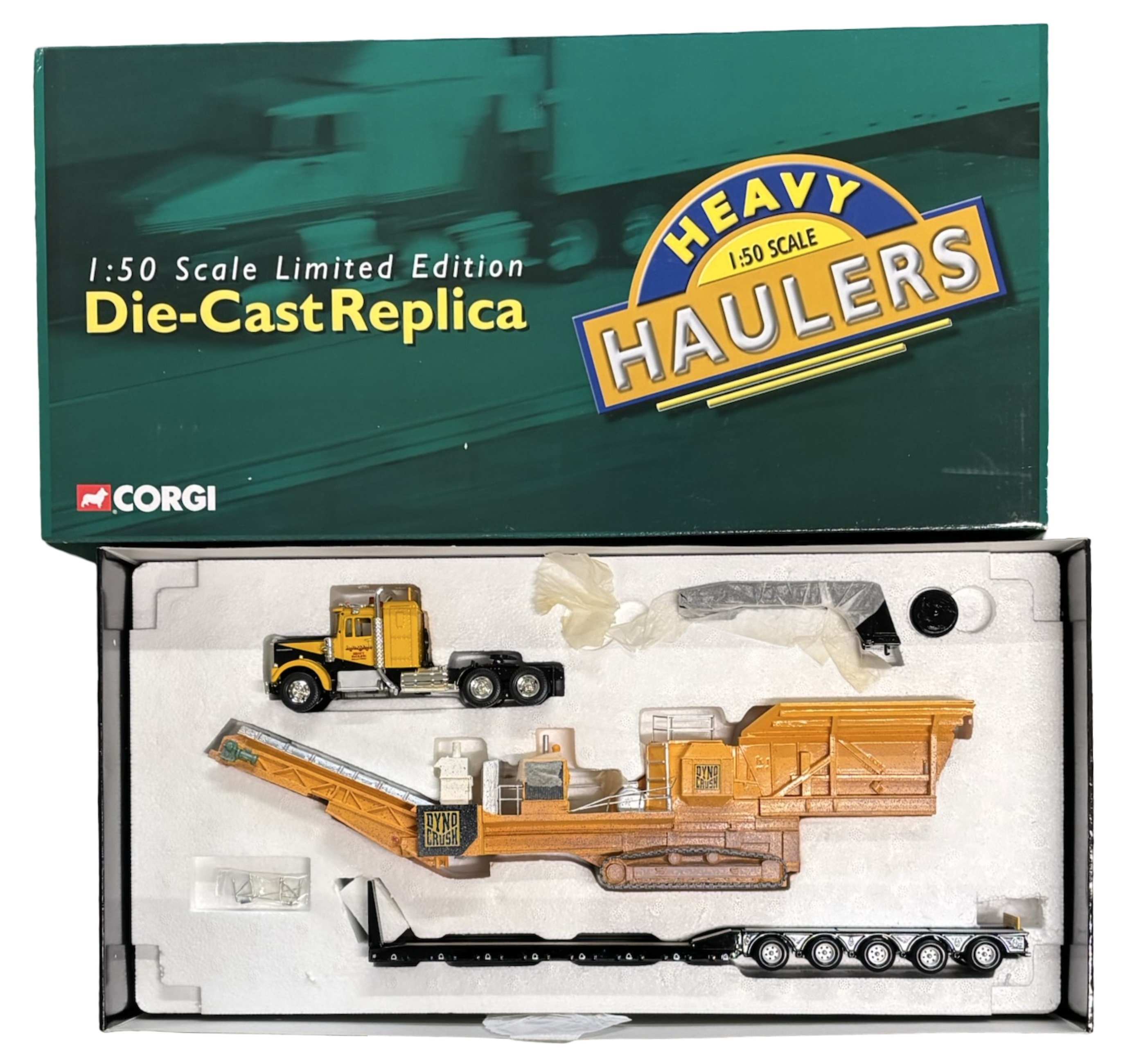
Our Vintage Toy Sale, which takes place later this month, includes a tremendous single-owner collection of Corgi Classics Heavy Haulage models, some of the most sought-after of all die-cast toys. It is a good opportunity to remember just what a juggernaut (if you will forgive the pun) Corgi was in the toy market in the second half of the 10th century.
Although the brand didn’t actually come into existence until 1956, the Corgi story starts in 1932, when German toy manufacturer Philip Ullman emigrated to the UK and founded the Mettoy Company of Northampton, which launched a range of tinplate metal wind-up toys.
This kind of toy came from the past, but after the war, when toys were again allowed to be manufactured, it was a different type of model which took the country by storm, and it wasn’t made by Mettoy. Instead, enter Frank Hornby, doyen of models and toys, who had launched his Dinky brand in 1935; by the early 1950s it was the market leader, with the upstart competitor Matchbox also stealing market share from Mettoy.
Ullmann realised that to compete he would have to come up with a new range of more modern toys, and a snappy brand name to go with it. Starting with a list of over 70 possible names, it was whittled down to one: Corgi. There were two reasons for this: the models were to be made in Swansea (Corgi is a Welsh breed of dog); and the firm figured that the connection with royalty (the young new Queen was well-known for her love of the breed) couldn’t do any harm.
Initial models were of British cars, including the Ford Consul, Austin A50 Cambridge and Vauxhall Velox, and they were an immediate hit – in the first year some 65,000 models were sold. By the 1960s the firm was enjoying something of a Golden period, producing movie tie-ins including the famous Aston Martin DB5 from the James Bond film ‘Goldfinger’ (a model it reissued in 2021).
In 1989 Corgi was taken over by worldwide toy manufacturing giant Mattel. Soon afterwards the company launched a new range, aimed at adult collectors: Corgi Classics. This range featured nostalgia cars, vans and trucks from the 1930s through to the 1960s, aimed squarely at those who had grown up during that era.
As part of this range, the ‘Heavy Haulage’ brand was created, aimed at an older, dedicated hobbyist market which demanded high-fidelity models – these were no longer toys. Because of this commitment to quality, coupled with relatively low volume production, the Corgi Classics Heavy Haulage range is now one of the most sought-after categories in die-cast collecting.
Our June Toy Sale includes nearly 60 lots of Corgi Classics Heavy Haulage models, all from a single collection. Most of them are in mint condition, in their original boxes. Unsurprisingly, the auction is already attracting significant attention from serious collectors right across the UK and beyond.
Ironically, given that it was competition from Frank Hornby’s Dinky toys which was the spur for the launch of the Corgi brand in 1956, it was sold to Hornby in 2008 and is now part of a group which also includes other iconic British toy brands such as Scalextric and Airfix. Whilst the sale meant that Corgi’s days as an independent brand were definitively over, it does mean that its future is secured – and that today’s children will be able to indulge their passion for collecting as they too become adults.