01/04/2026 General News
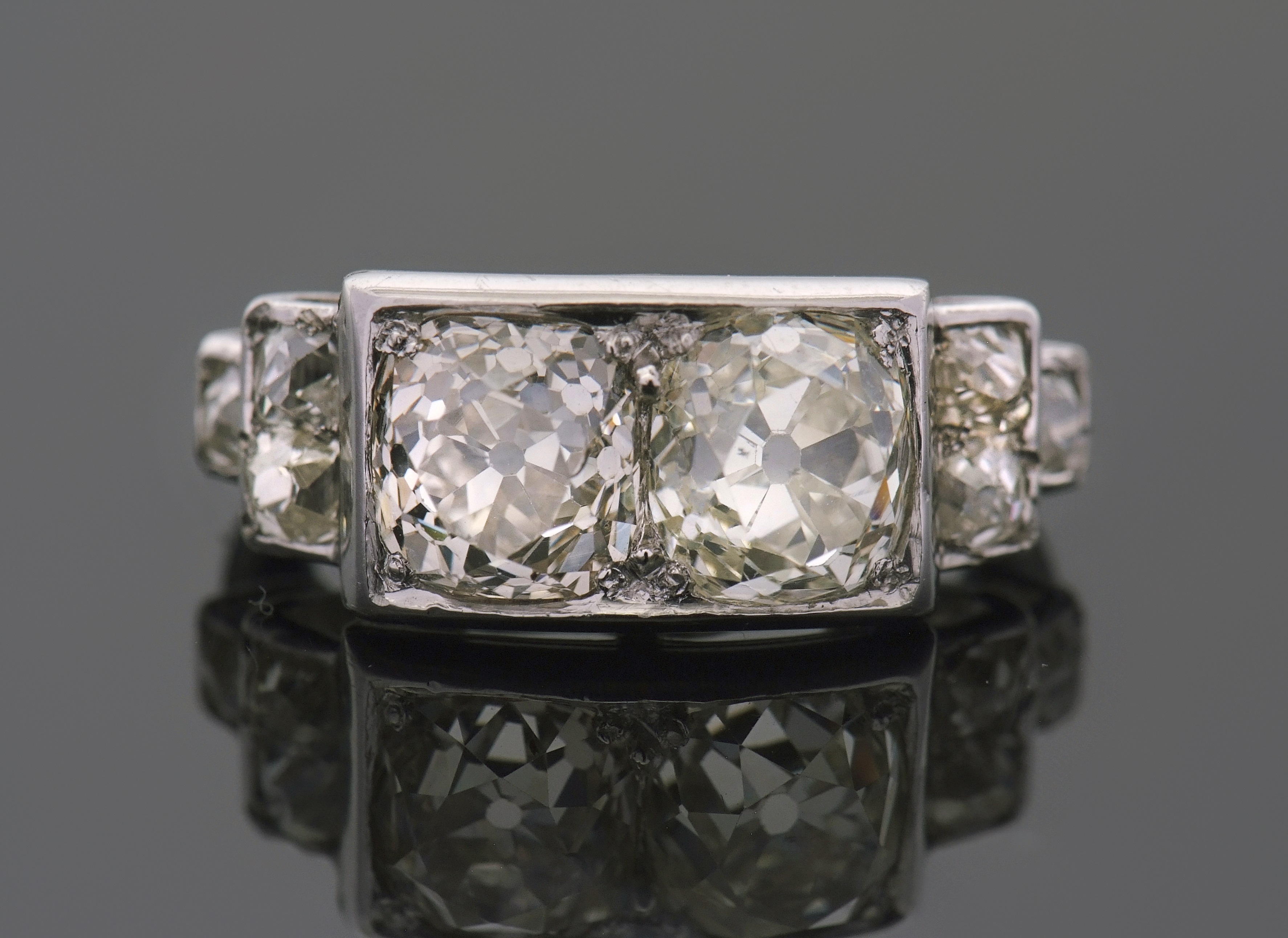
‘A diamond is just a chunk of coal that did well under pressure,’ quipped Henry Kissinger, but for many people, diamonds are forever (almost literally – most diamonds are between 3 billion and 3.5 billion years old). Whether it’s a rarely seen rose cut stone or a modern brilliant cut solitaire, diamonds continue to be in demand, writes Angela Marshall.
In the Middle Ages, people believed that diamonds had mystical and even medicinal properties, and they were sought after as amulets. By Tudor times, they were regarded as symbols of power; wealth and power have always been interlinked, but this was added to by a sense of divinity.
Early diamonds almost all came from Brazil but with the rise of the East India Company, new sources were found in India and neighbouring countries.
Victorian colonial expansion brought much of southern Africa into the British Empire. This part of the world was prized for its gold and platinum deposits, but the search for those precious metals revealed an enormous amount of diamonds.
Fast forward to the Cold War, and Soviet Russia found itself cut off from the supply of the stones, which were important for industrial rather than jewellery reasons. The Soviets started looking in their own back yard and discovered significant deposits. Meanwhile, other countries such as Canada and Australia were busy seeking seams of the precious stones on their own territory; both are important and rich sources of diamonds today.
Diamonds are the hardest natural substance known to man, so it has always been a challenge to cut the large stones into bright, sparkling jewels. Achieving this is all about directional hardness; it’s a bit like cutting wood with the grain.
Cutting diamonds is about maximising the yield and optimising the brilliance of the stone. The aim is to bring out the best in the four ‘Cs’: cut, colour, clarity and carats (i.e. weight).
In Tudor times the cutting was simple: Point or Rose cut stones were rudimentary by today’s standards. By the late 18th century, however, we started to see Old Mine and Old European cuts, the beginnings of today’s brilliant cuts.
It wasn’t until the early 20th century that a Polish mathematician called Marcel Tolkowsky calculated the precise angles need to give the best return of light from the stone, with every aspect contributing to its brilliance. He found that if a stone was cut too deep or shallow then light would escape out the sides or bottom of the diamond, resulting in a loss of brilliance (the white light reflected upwards), fire (the coloured light reflected from within), and sparkle (the combination of the two).
This, combined with better tools and advances in optics, created the modern Round Brilliant cut, which remains the standard today.
When consigning diamonds to a sale, it is vital that they are properly assessed for cut, colour, clarity and carats. This is not a job for an amateur, because getting it wrong can result in mis-valuations. That is why becoming Diamond Fellow of the Gemmological Association (the key diamond grading qualification) requires a 100% flaw-free performance in the exams.
It was De Beers who came up with the line ‘A Diamond is Forever’ in a 1947 advertising campaign, a line recognised in 1997 by Ad Age as the greatest advertising slogan of the 20th century. It certainly expresses well the lasting appeal as one of the most valuable of gemstones, and why diamond jewellery remains a very strong performer in the saleroom.