11/04/2026 General News
One of the best feelings as an auctioneer is to be on the rostrum facing a packed saleroom, with several staff members linking bidders on the phones and, of course, an eager community of buyers on the internet waiting to pounce. It is this saleroom buzz which really marks out a great sale, and which leads to the best prices being achieved when the hammer goes down, writes Tim Blyth.
This was the scenario for our first two day Fine Sale of 2026 last month, when over 350 lots went under the hammer, representing the very best in all categories of antiques, from ceramics to glassware, silver, watches and jewellery, ephemera, furniture, decorative arts, and fine pictures.
The result was an electric atmosphere, sone fiercely competitive bidding, a very high sale rate, and many hammer prices in excess – often far in excess – of the pre-sale estimates.
I thought I would give you just a few highlights from the sale in today’s article; if you are interested, the full results are available on our website. All of the prices quoted are hammer prices, excluding buyer’s premium.
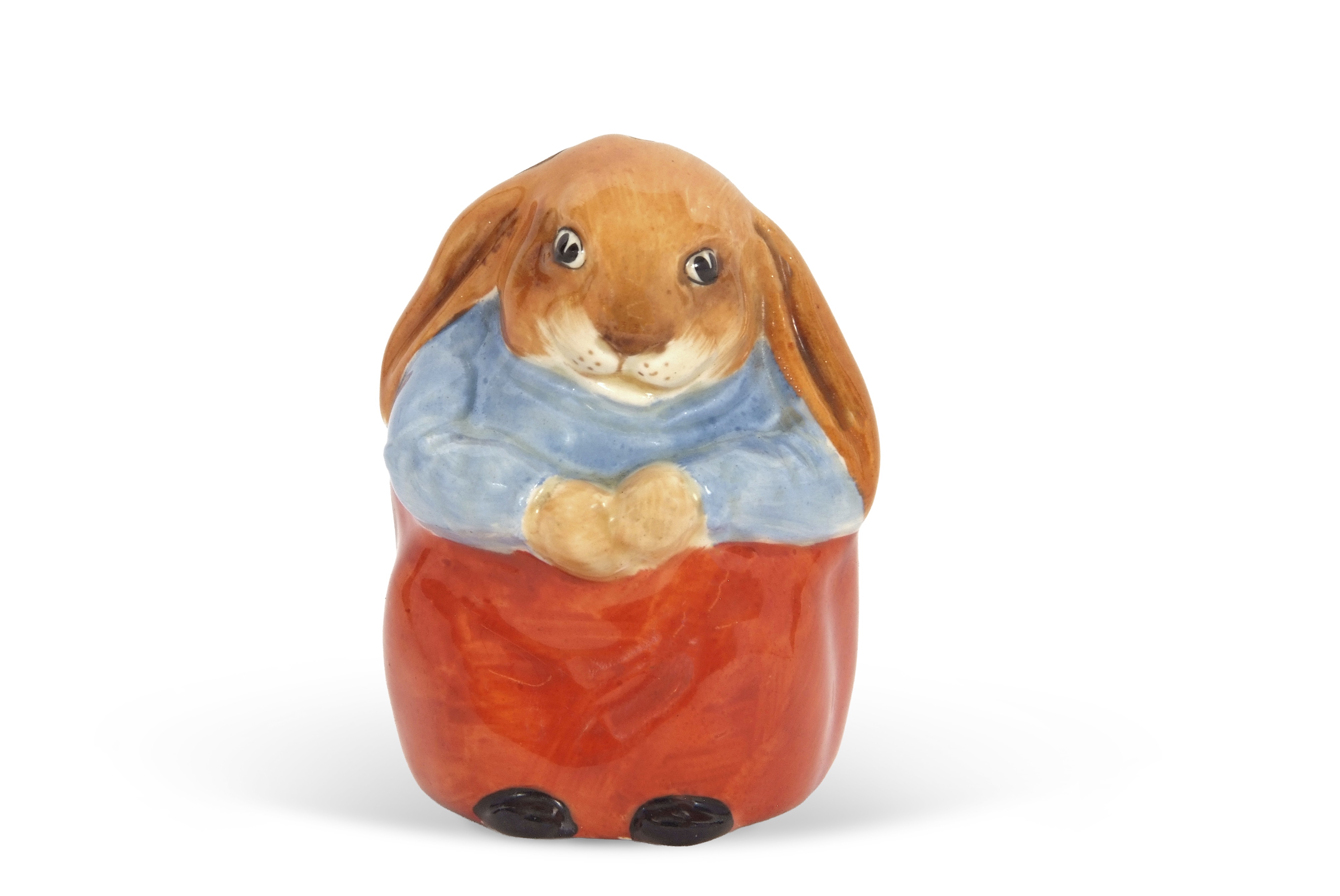
Ceramics and glassware first: as ever this section included the whole gamut of English, European and oriental makers. English porcelain was in particular demand; a rare Royal Doulton Bunnykins sugar sifter designed by Charles Noke in the 1930s sold for £1,550 (estimate £200-£300), while a Martin ware double-sided grotesque face jug dating from 1911 sold for £2,050 (estimate £1,200-£1,500).
Slightly more unusual was a mid 19th century European porcelain parrot, colourfully decorated in iron red, perched on a painted wooden stand mounted on a brass hanging display hoop. With the parrot measuring a whopping 71cm long, this was a lot which couldn’t be ignored, and the bidders certainly didn’t: the hammer fell at £3,100 (estimate £400-£600).
Medals and militaria always attract enthusiasts, especially when there is a story behind them. Such was the case with a rare Military Medal and Burma Star originating from the Battle of Kohima in Burma in 1944. It was impressed to Sgt E.H.Smith of the Queens Royal Regiment (West Surrey), following the attack on Jail Hill during the battle, when he would have fought alongside soldiers from the Norfolk Regiment. It sold for £2,600 (estimate £700-£1,000).
The resurgence in the fine antique furniture market shows no sign of stopping, and many lots in the furniture section outstripped their pre-sale estimates. The star lot was probably an unusual 18th century side cabinet, which sold for £2,300, around ten times its estimate of £200-£300.
It’s not every day that you get the chance to own a picture by Rembrandt, but our Fine Sale did indeed offer this opportunity, with a 19th century impression of laid paper of a monochrome etching of Christ Preaching. Given that this was a later impression, rather than an original, we had estimated it at £300-£400, but that chance to hang a Rembrandt on the wall was too strong, and the winning bid was £3,200.
The Pictures section of the sale included some very fine original works, including a coastal shipping scene by the circle of Claude Joseph Vernet which sold for £1,600 (estimate £300-£400) and a lovely oil painting by Belgian artist Florent Willems entitled ‘Feeing the New Arrivals’ which sold for £1,200 (estimate £300-£400).
But perhaps the star picture was a work by Norfolk artist Sir John Arnesby Brown (1866-1955), whose oil painting ‘Cattle at Rest’ achieved £3,000 (estimate £800-£1,200).